The Spokane Complex fires that started August 1 changed our corner of the city overnight. Hundreds of families in Indian Trail, Five Mile, and the surrounding neighborhoods lost homes, landscapes, and decades of work in a single day. As a local business rooted in this same northwest Spokane neighborhood, we want to start with the only thing that matters: our condolences to every family affected. This guide covers what fire does to an irrigation system, how the insurance process works, and the one deadline that shouldn’t slip while everything else is up in the air.
Quick answer: Fire usually destroys the above-ground parts of a sprinkler system (heads, valve boxes, backflow assembly, controller, drip lines) while buried pipe often survives. Homeowners insurance typically covers fire-damaged irrigation under the dwelling or other-structures coverage. File your claim, document everything with photos, and submit an itemized replacement estimate. And before mid-October, make sure any system that still holds water gets winterized, or Spokane’s first freeze will add new damage to old.
What does wildfire actually do to a sprinkler system?
Irrigation systems live in two worlds, and fire treats them very differently.
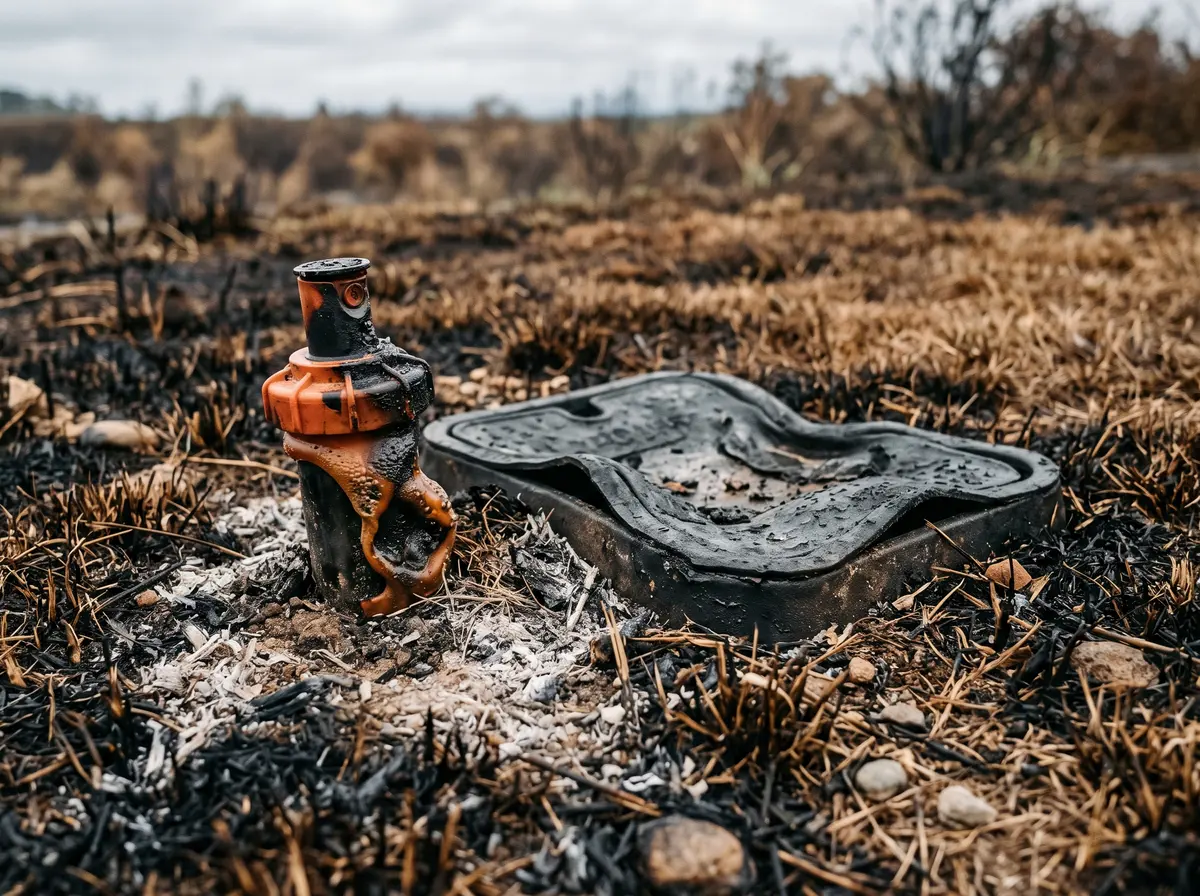
Above ground, almost nothing survives direct fire. Pop-up heads and risers are plastic and melt at temperatures far below what a structure fire or wind-driven grass fire produces. Valve boxes warp and collapse onto the manifolds inside them. Drip tubing is gone. Controllers mounted in garages burn with the garage. Even the brass backflow assembly, which often looks intact, routinely loses its internal seals, springs, and test cocks to heat, and Washington requires that assembly to pass a test before the system legally runs again.
Below ground is a different story. Pipe buried at the standard 8 to 12 inches is insulated by soil and frequently comes through fine, even on properties where everything above it burned. The exceptions: shallow lines, pipe running under mulch beds or tree roots that smoldered for hours, and wiring runs, which can fail from heat traveling along the trench.
What this means practically: you can’t tell how bad it is by looking. A system that looks totaled may need only above-ground work, and a system that looks okay may have melted wiring and cracked laterals. A pressure test and zone-by-zone inspection settles it, which is why an itemized professional estimate matters so much for the next step.
Does homeowners insurance cover a fire-damaged sprinkler system?
In most cases, yes. An in-ground irrigation system is typically covered under the dwelling coverage (Coverage A) or other structures coverage (Coverage B) of a standard homeowners policy when fire is the cause of loss. It’s the same bucket that covers fences, sheds, and detached garages. Policies differ, so confirm with your adjuster, but fire is the peril policies are built around; this is not a gray-area claim.
Two things strengthen an irrigation claim:
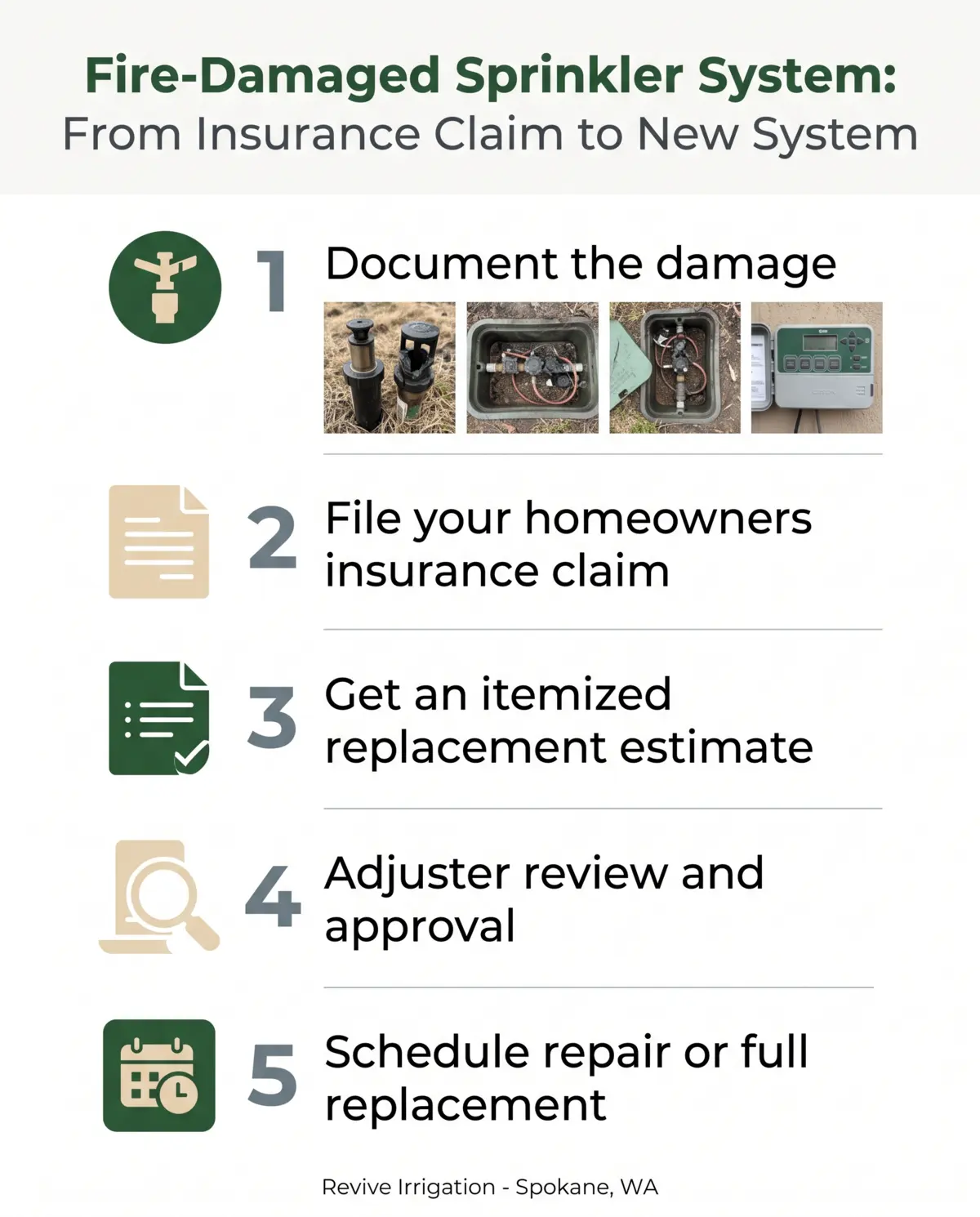
Document before cleanup. Photograph every melted head, warped valve box, the burned controller, and the backflow assembly before debris removal buries the evidence. Wide shots plus close-ups. If cleanup already happened, don’t panic; a professional inspection can still establish the damage.
Submit an itemized estimate, not a guess. Adjusters approve line items: head counts, valve counts, pipe footage, wire runs, backflow replacement, labor. A single round number invites delay. A detailed bid from a licensed local contractor usually moves through review faster.
One more thing worth knowing: after the August fires, the Washington Office of the Insurance Commissioner issued an emergency order protecting affected policyholders through September 30, 2026. It requires insurers to offer 45-day premium grace periods, waive late fees, and extend nonrenewal notice periods. If you’re displaced and mail isn’t reaching you, those protections exist for exactly this situation. The OIC’s wildfire insurance page also walks through the claim process step by step.
How long does the insurance process take?
Honest answer: longer than usual right now. With more than 800 structures damaged or destroyed across the Spokane area, every adjuster in the region is working through a backlog. Here’s the general shape of the timeline:
Filing to adjuster contact: days to a few weeks. Large carriers brought in out-of-state adjusters after the fires, which helps, but initial contact is still slower than a normal claim year.
Inspection and scope: one to several weeks. Irrigation is usually folded into the larger exterior and landscape scope of your claim. Having your own itemized irrigation estimate in hand when the adjuster visits keeps the system from becoming an afterthought line item.
Approval to work starting: depends on the season. This is the part Spokane homeowners can actually control, and it’s where timing gets important.
When can a new system actually go in?
Spokane’s irrigation install season runs while the ground is workable, roughly April through late October. The first hard freeze typically lands in mid-October, and once the ground freezes, trenching waits until spring.
That creates two realistic paths:
This fall: If your claim moves quickly and debris removal is done, repairs and even full installs can happen into October. Fall installs also mean the system is ready the day new sod or seed goes down in spring.
Next spring: Most fire-affected properties will land here, and that’s fine, but spring 2027 will be the busiest install season this region has ever seen. Every irrigation contractor in Spokane will be rebuilding the same neighborhoods at once. Getting your estimate done and your spot scheduled now, before the snow flies, is the difference between an April install and an August one.
Either way, irrigation goes in early in the landscape rebuild: after grading, before sod, seed, or planting. If you’re sequencing contractors, that’s where we fit. Our sprinkler installation guide covers what a full install involves, what it costs, and how long it takes.
The one deadline that shouldn’t slip: winterization
Here’s the problem almost nobody is thinking about while dealing with everything else: a fire-damaged system that still holds water will freeze.
If your system was charged when the fire came through and it hasn’t been shut down and drained, the water sitting in those lines will freeze solid by late October. Freezing water expands with enough force to crack the pipe, manifolds, and fittings that survived the fire, turning a partial claim into a total loss after your adjuster has already scoped the damage. That’s a miserable conversation to have in March.
If your home is in the burn area, even if you can’t live there right now, have the system blown out or drained by mid-October. It’s a small job that protects whatever the fire spared.
How we’re helping
Revive Irrigation is a local company, and this fire hit our own neighborhood. Here’s what we’re offering families affected by the Spokane Complex fires:
- Free itemized estimates for insurance claims. We inspect the system, pressure test what’s testable, and write the line-item estimate your adjuster needs, at no charge and with no obligation to use us for the work.
- Full replacement quotes. For properties rebuilding from bare ground, we design and quote complete new systems, sized for the landscape you’re planning, not just the one you lost.
- Discounts for first responders and fire-affected families. Ask when you call.
We’ve spent decades working on Spokane systems, including plenty that other companies walked away from. If you just need straight answers about whether your system is salvageable, call and ask. That part is free too.
FAQ
Does homeowners insurance cover a fire-damaged sprinkler system? In most cases, yes, under the dwelling or other-structures portion of a standard homeowners policy. Confirm specifics with your adjuster and back the claim with an itemized replacement estimate.
Should I repair or fully replace after a fire? If damage stops at the heads, valve boxes, and controller, repair may be enough. If heat reached pipe or wiring, or the landscape is being rebuilt anyway, replacement is usually the smarter long-term call. A pressure test tells you which.
How much does replacement cost in Spokane? As of 2026, most standard residential installs run $3,500 to $7,500, with larger properties running $7,500 to $12,000. Your itemized estimate will reflect your actual zone count and layout.
Do I need to winterize a damaged system? Yes. Any system still holding water needs a blowout or drain-down before Spokane’s mid-October freeze, or freeze damage will stack on top of fire damage.
Can buried pipe survive a wildfire? Often, yes. Soil insulates pipe at standard depth. Shallow lines and pipe under smoldering mulch or roots are the usual casualties. A pressure test confirms it.
Talk to a neighbor, not a call center
If your home or a neighbor’s was affected by the fires, call us at (509) 986-4262 for a free insurance estimate or replacement quote, or request an estimate online. We’ll give you a straight answer about what survived, what didn’t, and what it takes to bring your landscape back.
Revive Irrigation Services, Spokane, WA. (509) 986-4262. Proudly serving Indian Trail, Five Mile Prairie, and the greater Spokane area.
Frequently asked questions
Does homeowners insurance cover a fire-damaged sprinkler system?
In most cases, yes. An in-ground irrigation system is usually covered under the dwelling or other-structures portion of a standard homeowners policy when fire is the cause of loss. Coverage details vary by policy, so confirm with your adjuster and submit an itemized replacement estimate with your claim.
Should I repair or fully replace a sprinkler system after a fire?
It depends on how deep the damage goes. If only heads, valve boxes, and the controller burned, a repair may be enough. If heat reached shallow pipe and wiring, or the landscape is being rebuilt from bare ground anyway, full replacement is usually the better long-term call. A pressure test and inspection will tell you which side of the line you're on.
How much does it cost to replace a sprinkler system in Spokane?
As of 2026, most standard residential systems in Spokane run $3,500 to $7,500 to install, with larger or more complex properties running $7,500 to $12,000. An itemized estimate is what your insurance adjuster will want to see either way.
Do I need to winterize a fire-damaged sprinkler system?
Yes, and it matters more than usual this year. If a damaged system still holds water when Spokane's first hard freeze arrives in mid-October, that water freezes and cracks the pipe and fittings that survived the fire, adding damage your claim may not yet account for. Have the system blown out or drained by mid-October even if the home isn't livable.
Can buried irrigation pipe survive a wildfire?
Often, yes. Pipe buried 8 to 12 inches deep is insulated by the soil and frequently survives even when everything above ground burned. Shallow lines, pipe under burned mulch or root systems, and anything within a few inches of the surface are the most common casualties. A pressure test confirms what's intact.